
REGISTRO PARA CURSO DE PREPARADOR
TEMAS Y CREDITOS QUE USTED RECIBIRA
INDIVIDUAL FEDERAL TAX LAW UPDATE
Description
This course provides a detailed review of recent federal tax law changes affecting individual income tax returns. Participants will explore updates to filing status rules, dependency requirements, income reporting, adjustments, deductions, tax credits, withholding, estimated taxes, and current IRS guidance. Practical examples and real- world scenarios will demonstrate how recent legislative and administrative changes
impact the preparation of Form 1040 and related schedules while promoting compliance
with current federal tax law.
Form 1040 – Filing Status
Dependents – Standard Deduction
Tax Credits – Inflation Adjustments
ANNUAL FEDERAL TAX LAW UPDATE 2026
Description
This course provides an overview of the most significant federal tax law changes affecting the current filing season. Topics include recent legislative updates, IRS guidance, inflation-adjusted tax provisions, revised forms and instructions, new tax credits and deductions, filing requirements, compliance initiatives, electronic filing updates, and other developments that impact individual taxpayers and tax return preparers. Participants will learn how these changes affect the preparation of federal income tax returns and IRS compliance requirements.
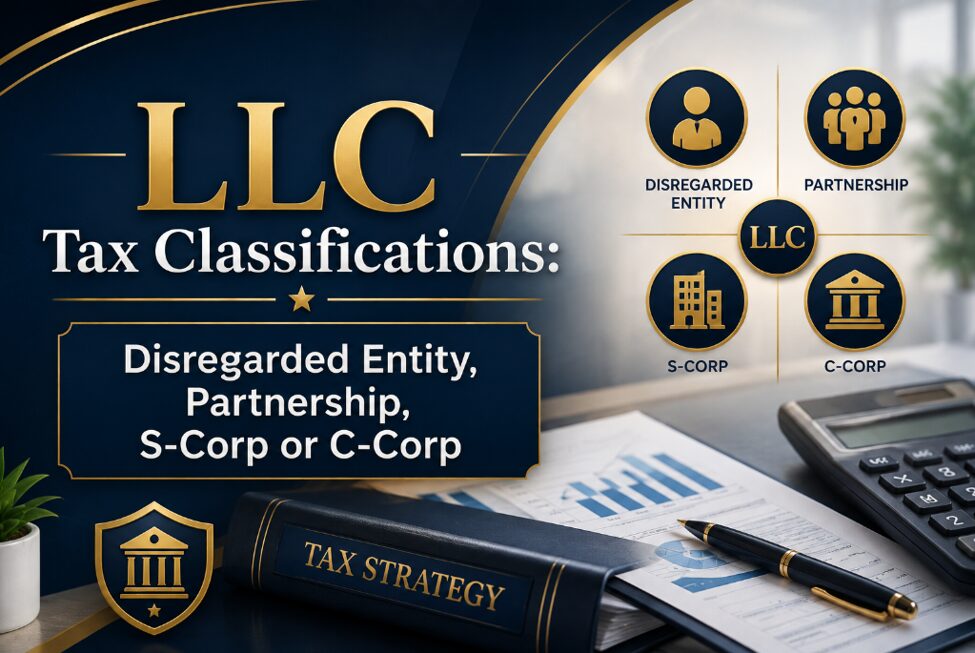
LLC Tax Classifications: Disregarded Entity, Partnership, S-Corp or C-Corp
Description
This course explores the federal tax treatment of Limited Liability Companies (LLCs) and the elections available under Treasury Regulation §301.7701. Topics include the default classification rules for single-member and multi-member LLCs, the check-the-box election (Form 8832), the S Corporation election (Form 2553), and the tax implications of each classification including self-employment tax, payroll requirements, pass-through taxation, and corporate-level taxation under Form 1120. The course also addresses the differences between a state-law LLC and its federal tax classification, reasonable compensation requirements for S Corporation shareholders, and how dual classification (LLC/C-Corp) affects banking relationships and financial reporting. Participants will be able to advise clients on the most appropriate tax structure for their business.
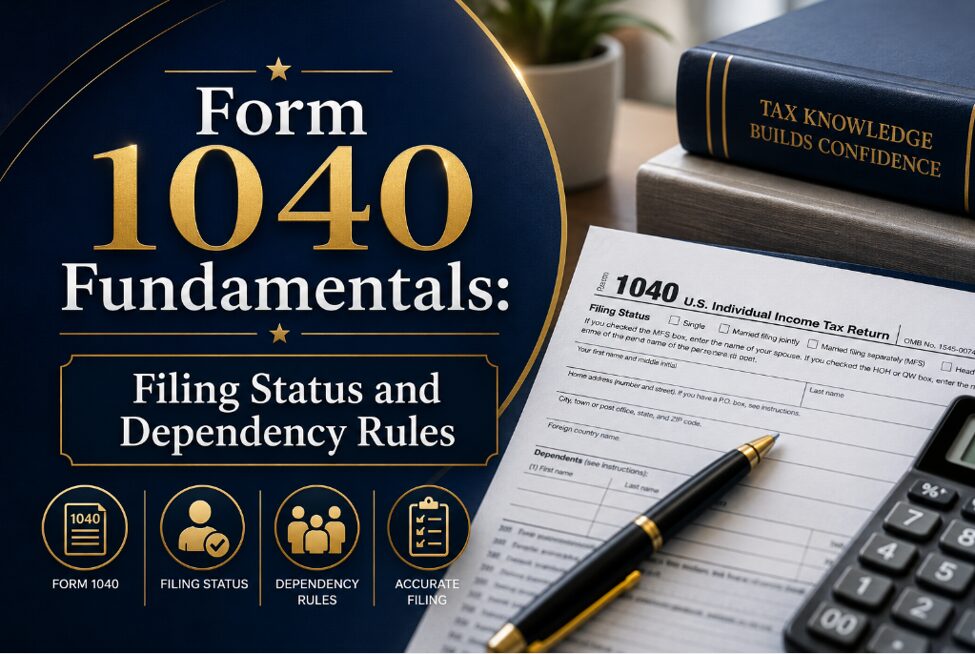
Form 1040 Fundamentals: Filing Status and Dependency Rules
Description
This course provides tax professionals with a thorough understanding of the foundational rules governing Form 1040 preparation, with emphasis on filing status selection and dependency determinations. Topics include the five filing statuses (Single, Married Filing Jointly, Married Filing Separately, Head of Household, and Qualifying Surviving Spouse), eligibility requirements and common errors for each status, the Qualifying Child and Qualifying Relative tests under IRC §152, tie-breaker rules, the impact of filing status on tax rates and standard deduction amounts, and documentation requirements. Special attention is given to Head of Household qualification and the due diligence requirements under IRC §6695(g). Upon completion, participants will be able to correctly determine the appropriate filing status and dependency claims for their clients.
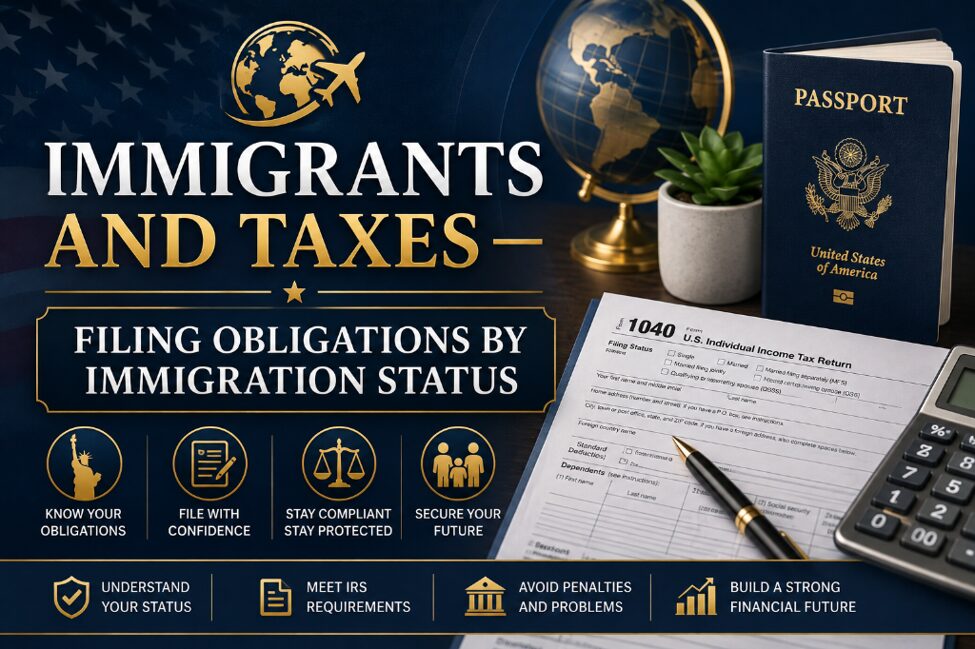
Immigrants and Taxes — Filing Obligations by Immigration Status
Description
This course examines the federal tax filing obligations of individuals with various immigration statuses, including lawful permanent residents, visa holders, undocumented individuals, and dual-status aliens. Topics include the determination of resident vs. non-resident alien status using the Substantial Presence Test and Green Card Test; tax treaty benefits; Individual Taxpayer Identification Number (ITIN) application requirements and renewal procedures (Form W-7); filing requirements for Form 1040 and Form 1040-NR; reporting of foreign income; and special considerations for taxpayers with DACA, TPS, or pending immigration cases. Upon completion, participants will be able to determine the correct filing status and form for immigrant clients and accurately advise them on their U.S. federal tax obligations.
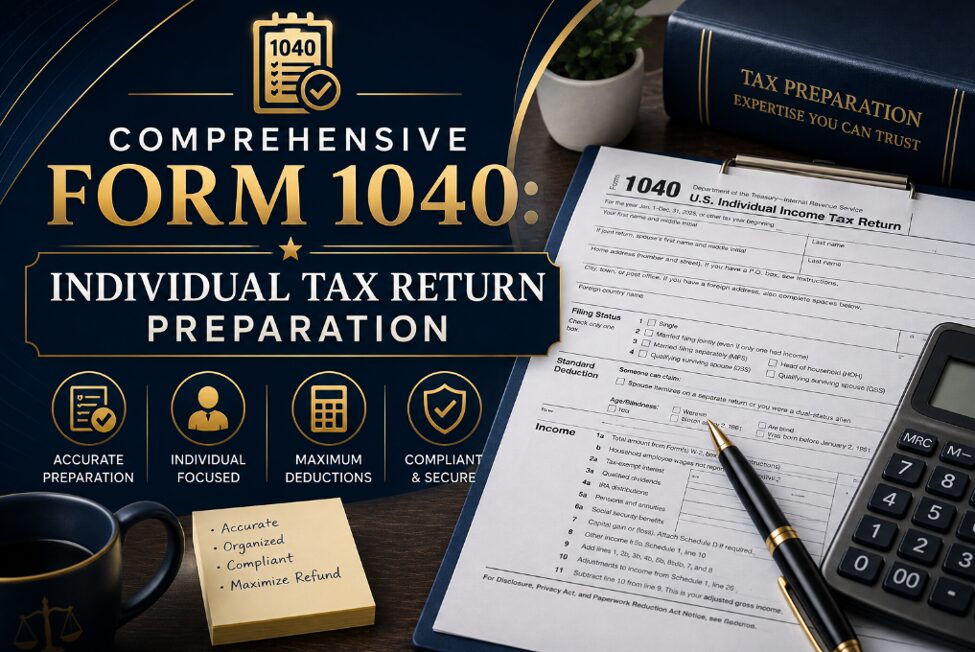
Comprehensive Form 1040: Individual Tax Return Preparation
Description
This comprehensive 8-hour course provides tax professionals with a thorough understanding of the Form 1040 individual income tax return. Topics include filing status, dependency rules, and standard vs. itemized deductions (Schedule A); reporting wages, self-employment income, and other income sources; Schedule C — profit or loss from business; capital gains and losses (Schedule D/Form 8949); adjustments to income; and key tax credits including the Earned Income Tax Credit (EITC), Child Tax Credit (CTC), American Opportunity Tax Credit (AOTC), and Child and Dependent Care Credit. Additional topics cover the Affordable Care Act Premium Tax Credit (Form 8962), Qualified Business Income deduction (§199A), retirement income reporting, and Alternative Minimum Tax (AMT). Upon completion, participants will be able to accurately prepare a complete individual income tax return, identify common errors, and apply current tax law to real-world client situations.
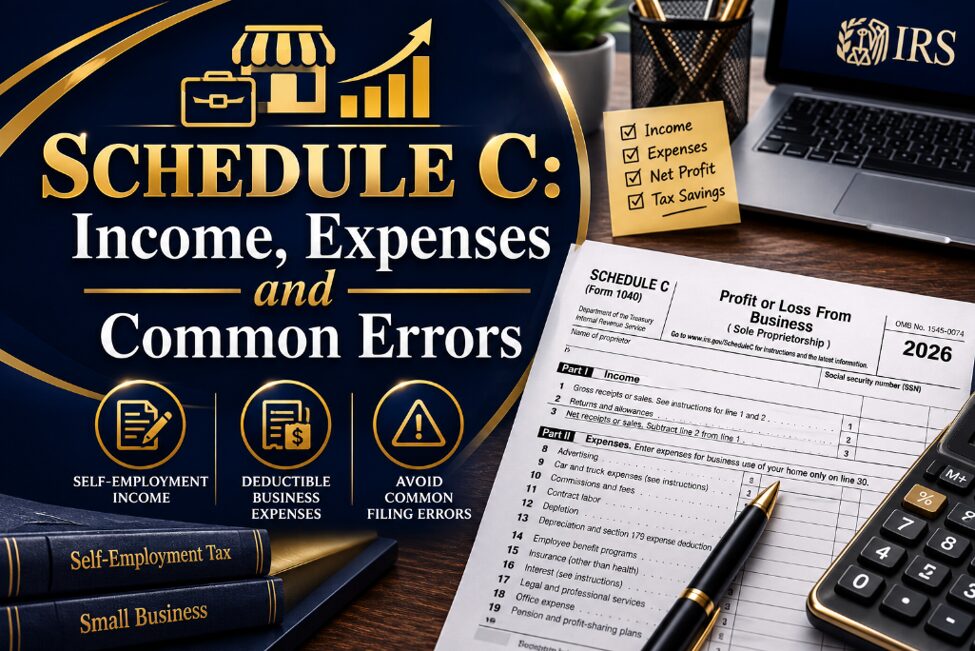
Schedule C: Income, Expenses and Common Errors
Description
This course provides tax preparers with a comprehensive understanding of Schedule C reporting, including the proper classification of income, deductible expenses, and cost of goods sold, as well as common errors that may trigger IRS audits. Participants will learn how to accurately report self-employment income and apply best practices to ensure compliance with federal tax law.
Ethics and Due Diligence for Tax Preparers
Description
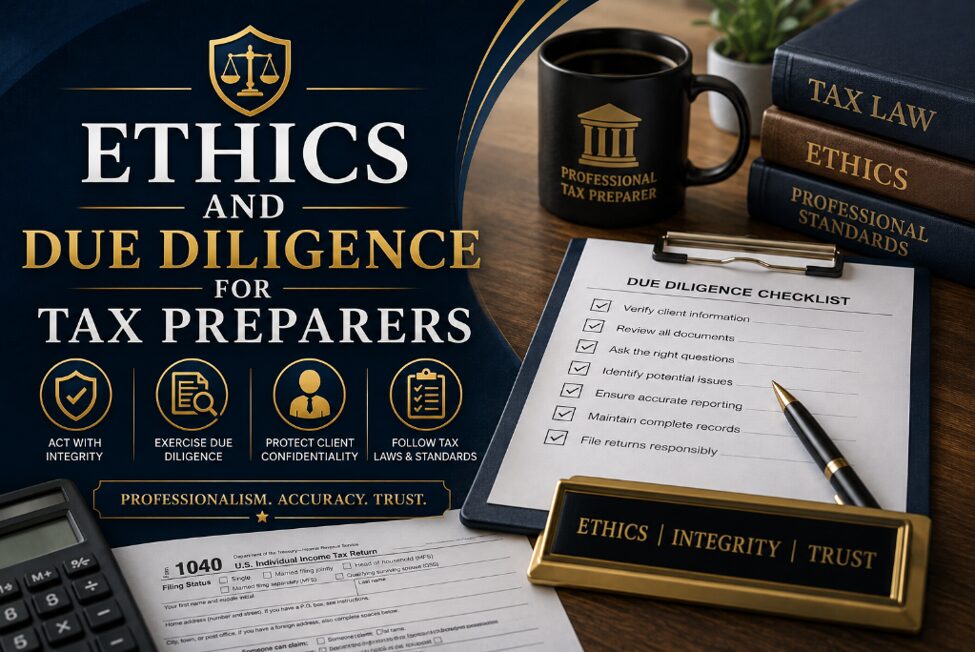
This course provides tax preparers with a comprehensive understanding of ethical responsibilities and due diligence requirements under IRS guidelines. Participants will learn the standards outlined in Circular 230, including professional conduct, compliance obligations, and penalties for noncompliance. The course also covers due diligence requirements for tax credits, including the Earned Income Tax Credit (EITC), the Child Tax Credit (CTC), and other applicable credits. Emphasis is placed on practical application, documentation requirements, and the avoidance of common ethical violations in tax preparation.
One Big Beautiful Bill Act (OBBBA) — Key Tax Changes for 2026
Description
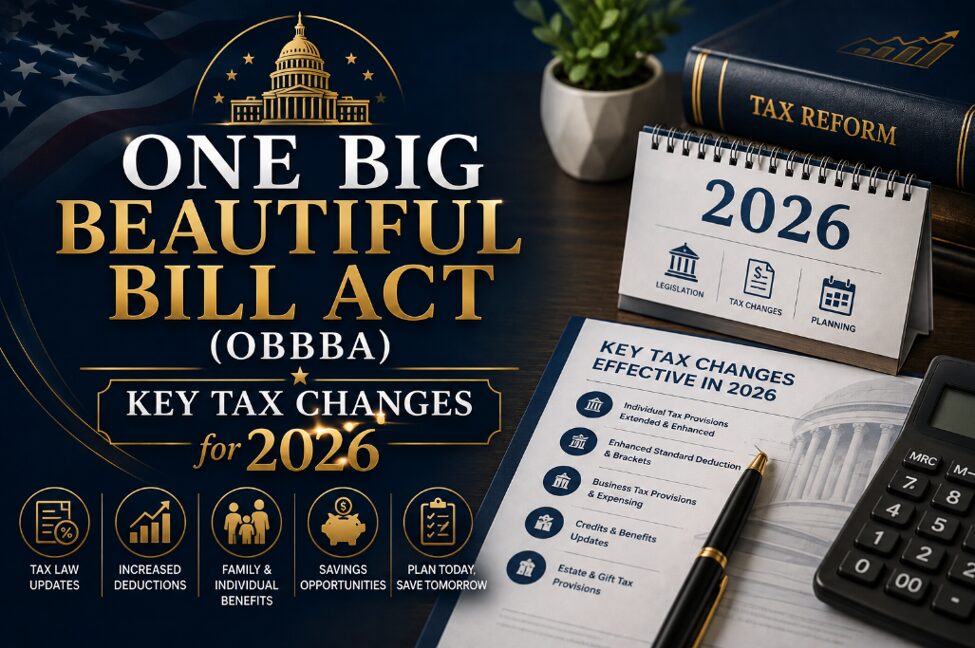
This course covers the major tax law changes enacted under the One Big Beautiful Bill Act (OBBBA) affecting the preparation of 2026 individual income tax returns. Topics include the new above-the-line deduction for qualified tip income (up to $25,000), the deduction for qualified overtime compensation, the enhanced additional standard deduction for taxpayers age 65 and older ($6,000), the increased State and Local Tax (SALT) deduction limit of $40,400 with phaseout rules, changes to the Child and Dependent Care Credit, the refundable Adoption Credit, updated 1099-K and 1099-NEC reporting thresholds, reinstatement of 100% bonus depreciation, and the new Trump Accounts for children born after December 31, 2024. Participants will leave prepared to apply these legislative changes to client returns for tax year 2026.
AFFORDABLE CARE ACT TAX UPDATE
Description
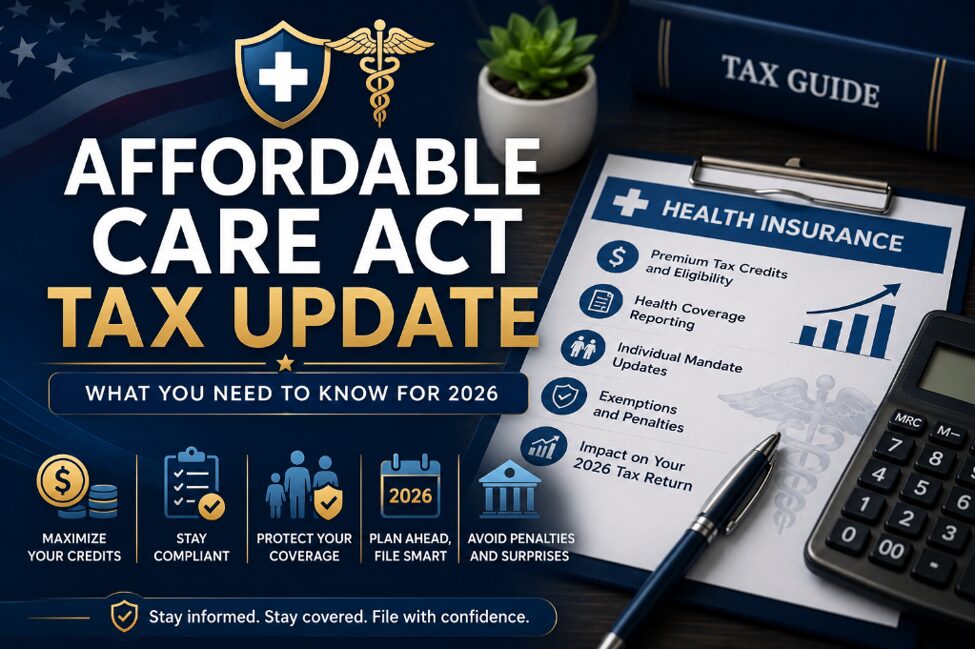
This course provides an in-depth review of current federal tax law affecting the Affordable Care Act (ACA) and the reporting of the Premium Tax Credit. Participants will examine recent IRS guidance involving Forms 1095-A and 8962, eligibility requirements, advance premium tax credit reconciliation, repayment limitations, shared responsibility provisions, and common preparation errors. Practical examples demonstrate accurate reporting and compliance with current ACA tax requirements.
Form 1095-A
Form 8962
Premium Tax Credit
Marketplace Changes